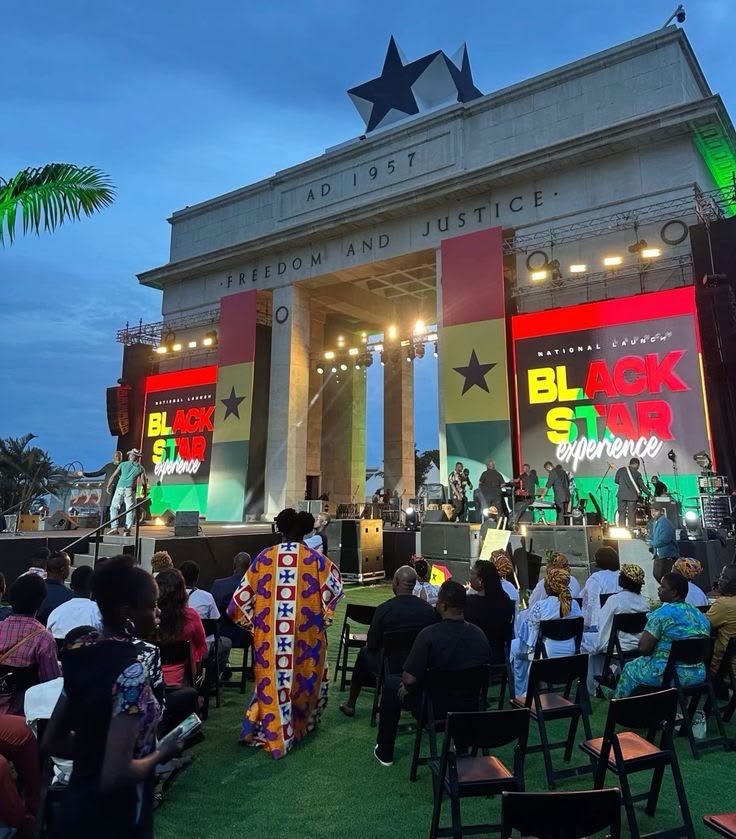
Ghana wears its welcome openly. Akwaaba — "you are welcome" — is the first word most travellers learn, and it sets the tone for everything that follows. This is a country of warm, easy hospitality, of highlife and afrobeats spilling out of roadside speakers, of markets that hum from dawn, and of a coastline where the Atlantic breaks against fishing villages and old stone forts alike.
A living history
Ghana was the first sub-Saharan African nation to win independence, in 1957, and that pride runs deep. But its story reaches much further back. Along the coast stand the great trading castles of Cape Coast and Elmina — UNESCO World Heritage sites whose dungeons hold the sombre memory of the transatlantic slave trade. Inland, the Ashanti kingdom still crowns its kings in Kumasi, where kente cloth is woven by hand and gold remains woven into ceremony.
The vibe
Days move to an unhurried rhythm. Accra is fast and creative — a city of galleries, beach bars, and a restless music scene — while the Volta Region greens into waterfalls and mountains, and the north opens onto savannah, mosques of mud and timber, and the elephants of Mole National Park. Wherever you go, food is generous: jollof rice (the subject of fierce, joyful regional rivalry), grilled tilapia and banku, fresh pineapple and kelewele on every corner.
Why now
English is the official language, the country is stable and famously friendly, and distances are manageable. For a first journey into West Africa, there is no gentler, richer introduction than Ghana.